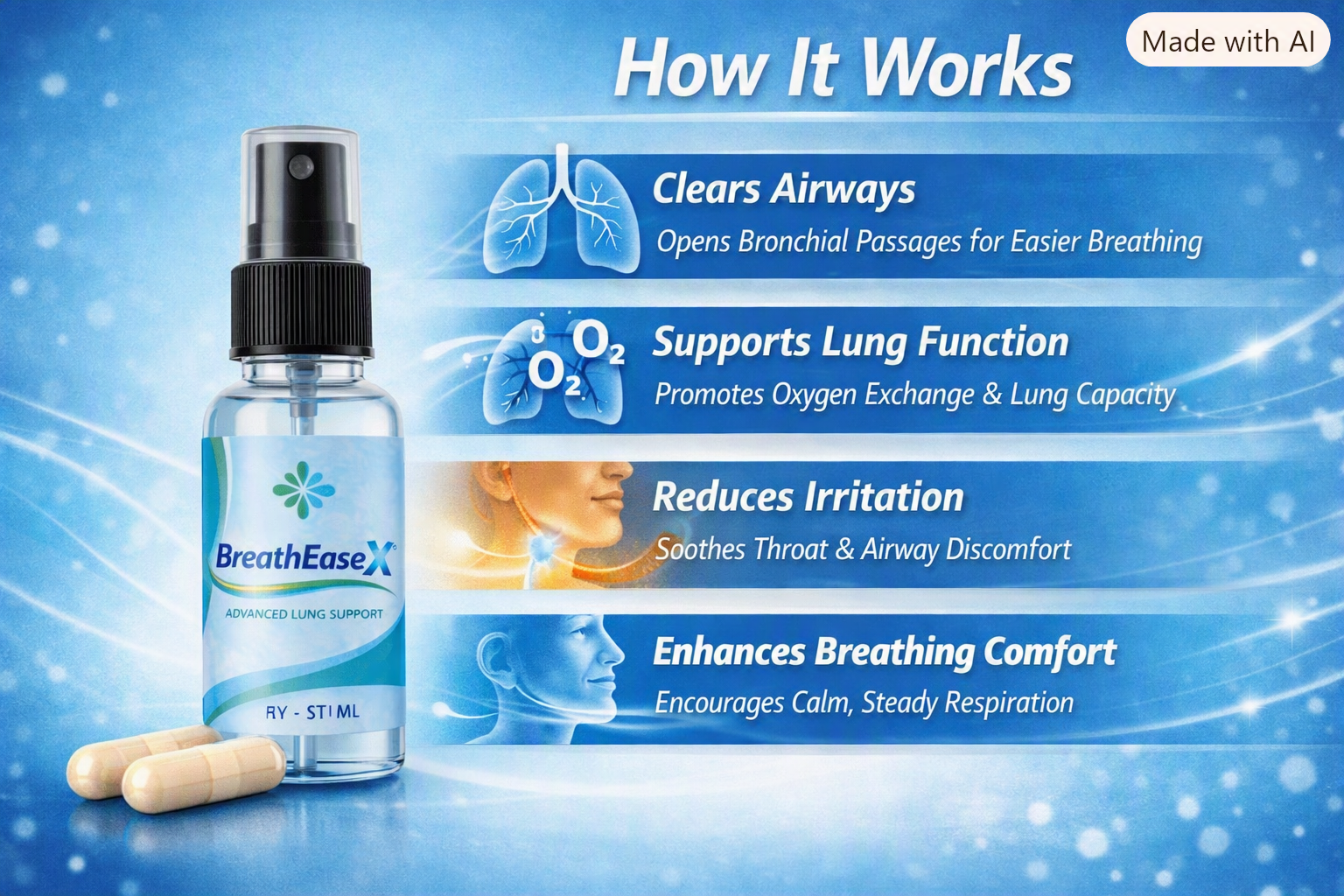
BreathEaseX 60-Day Review: The Window Where Things Change
Weeks four to eight are where the reports cluster. This one matches that pattern.
Denise K.
Does BreathEaseX work after 60 days?
Sixty days covers the window in which most users report noticeable change, typically between weeks three and six. By this point the mucolytic effects have stabilised and the slower antioxidant and cardiovascular components have had time to build. Reported changes at 60 days commonly include improved stair tolerance, shorter recovery after exertion and steadier daily energy.
The measured numbers
Baseline, recorded across the week before starting: recovery to normal breathing after one specific flight of eighteen stairs averaged 104 seconds. Morning coughing episodes averaged eleven per week.
Day 30: recovery 88 seconds. Morning coughing four per week.
Day 60: recovery 61 seconds. Morning coughing two per week.
The recovery change is the one that surprised me. Forty-three seconds is not subtle, and it was consistent across repeated measurements rather than a single good day.
What weeks four to six felt like
The shift was not a moment. It was noticing, at some point in week five, that I had climbed to the second floor and started talking immediately rather than waiting.
That is the specific thing people describe and it is oddly hard to notice, because the absence of a limitation is less salient than its presence. I only registered it because I was logging numbers.
Energy through the afternoon also flattened out. Not higher — flatter. The three o'clock drop that I had assumed was normal became less pronounced. Since there is no stimulant in either formula, this is consistent with improved oxygen delivery rather than anything adrenergic.
Sixty days is the fair assessment window
The 4-bottle kit covers exactly this at $54 per bottle with free US shipping.
What did not change
Sleep duration, which was already adequate. Weight, which I was not trying to change. And breathlessness during genuinely hard exertion — a steep hill still produced the same limitation, just at a slightly later point.
That last one is worth stating. This did not make me fitter. It removed some of a constraint that was operating below my actual fitness level.
The plateau
Between day 45 and day 60 the numbers stopped improving. Recovery time held around 60 to 65 seconds and did not continue falling.
This matches what other long-term users describe: benefits build over roughly six weeks and then hold at a new baseline rather than climbing indefinitely.
It is worth knowing in advance, because expecting continuous improvement leads to disappointment at exactly the point the product has done what it does.
Practical friction
Two products, two routines. The capsules attach easily to breakfast. The spray is the one I forgot, usually on days I left the house early.
I ended up keeping the spray in my bag rather than the bathroom, which solved it. Worth mentioning because adherence is what determines whether any of this works, and the failure mode is mundane.
Pros and cons
What worked
- Recovery time improved from 104 to 61 seconds over 60 days
- Morning coughing dropped from eleven to two episodes weekly
- Afternoon energy flattened without any stimulant effect
- Change was consistent across repeated measurement, not a single good day
What did not
- Improvement plateaued around day 45 and did not continue
- No effect on limitation during genuinely hard exertion
- Remembering the spray is harder than remembering the capsules
- Sixty days is a long commitment before knowing
The verdict
Sixty days produced a clear and measurable change in recovery time and a noticeable change in daily exertion tolerance, with effects stabilising around week six. This is the window in which the product either demonstrates itself or does not, and in my case it did. The caveat is that this is one person's measured experience, not a trial, and the plateau means expectations should be set at a new baseline rather than continuous gains.