BreathEaseX Through Allergy Season: A Quercetin-Focused Review
My worst six weeks of the year, run with the one ingredient that theoretically addresses them.
Claudia W.
Does BreathEaseX help with seasonal allergies?
BreathEaseX contains quercetin, a flavonoid studied for mast cell stabilisation and its influence on histamine release, which is mechanistically relevant to allergic airway responses. However, quercetin's oral bioavailability is poor, and intranasal corticosteroids have substantially stronger evidence for allergic rhinitis. Any allergy benefit should be considered supplementary rather than primary treatment.
What my season normally looks like
Tree pollen from late March, grass from mid-May. Six to eight weeks of nasal congestion, throat irritation, cough and a general sense of not being able to breathe properly.
I use an intranasal corticosteroid, which helps substantially when I remember to use it consistently from the start of the season rather than reactively. That is the single most effective thing I do and I want to state it before anything else.
The quercetin rationale
Mast cells sit in airway tissue loaded with histamine, leukotrienes and other mediators. Allergen triggers degranulation, mediators release, smooth muscle contracts, vascular permeability increases, mucus production rises.
Quercetin has been studied as a mast cell stabiliser — reducing degranulation rather than blocking histamine after release, which is what antihistamines do.
The mechanism is coherent and the in-vitro evidence is reasonably consistent. The problem is getting enough of it into circulation.
The bioavailability problem, which the site does acknowledge
Quercetin is absorbed poorly, extensively metabolised in the gut wall and liver, and cleared fairly quickly. There is a real gap between the concentrations producing clear effects in cell culture and what oral dosing achieves in plasma.
The site says this explicitly on its ingredients page, which I checked expecting it to be glossed over.
Spray delivery bypasses first-pass hepatic metabolism for whatever is absorbed across the oral mucosa, which is a partial mitigation. It is not a solution and I would not want to overstate it.
For the lower airway, alongside proper allergy treatment
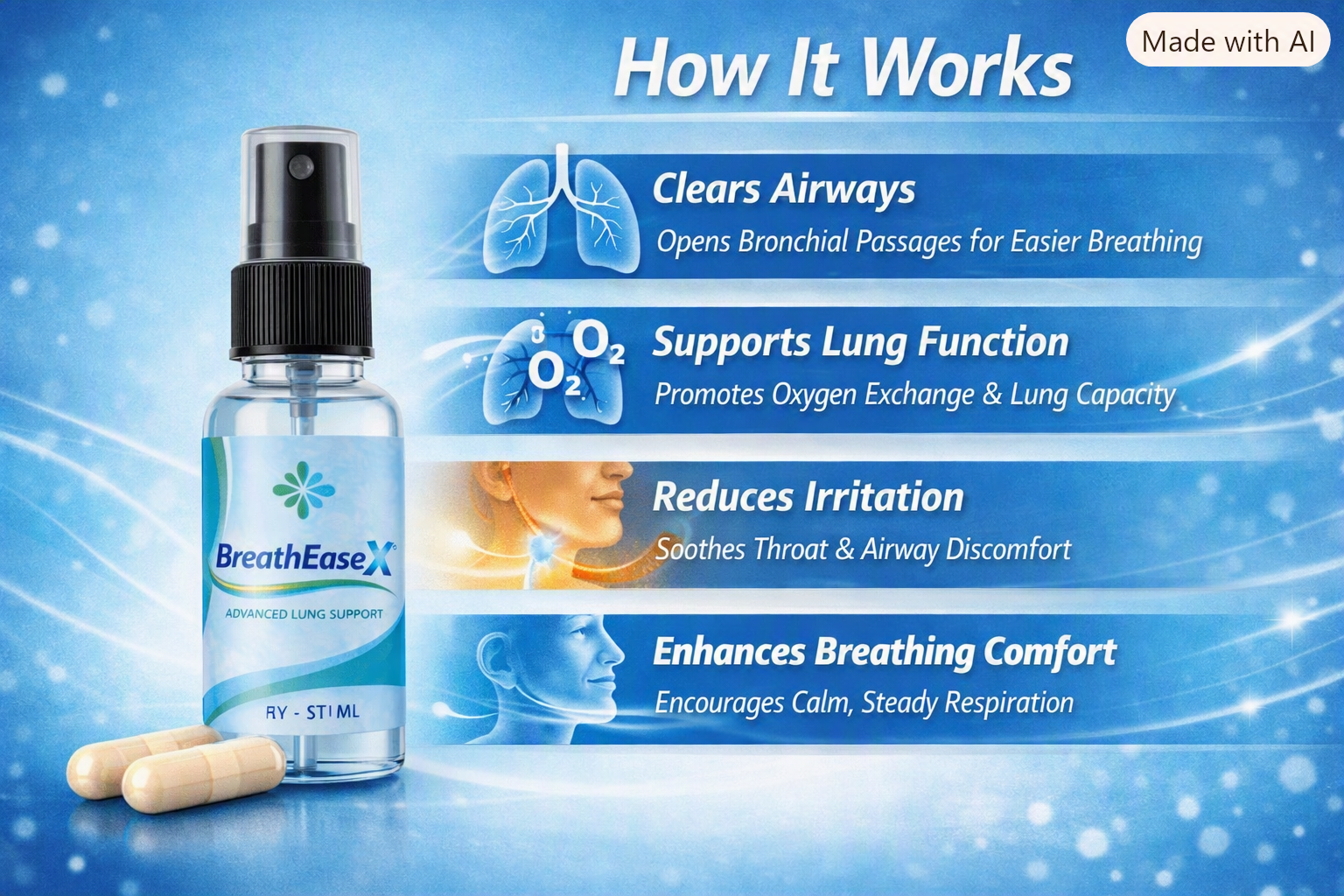
Quercetin sits with NAC, manuka honey, olive leaf, vitamin D3 and L-theanine in BreathEaseX.
What actually happened this season
Nasal symptoms: about the same as usual. Congestion, sneezing, the standard picture. The corticosteroid was doing the work here as it always does.
Throat irritation: noticeably less. This was the clearest change.
Cough: substantially less. In a normal season I have a persistent irritating cough for most of May. This year it was intermittent and mild.
Lost days: I usually write off four or five days per season as unproductive. This year, one.
The pattern is interesting — the lower airway symptoms improved and the nasal ones did not. Whether that reflects the spray reaching throat tissue and not nasal tissue, I cannot say, but it is at least a consistent story.
What else I changed
I have to disclose this. Partway through I started showering and changing clothes after being outdoors on high-count days, and running a HEPA filter in the bedroom.
Both of those are exposure reduction and both have better evidence than any supplement for allergic symptoms. The timing was week four, and my cough improvement had begun in week three, so I think the supplement contributed. But I am not confident about the magnitude.
What I would tell a fellow sufferer
- Use an intranasal corticosteroid consistently from the start of your season. It has the best evidence by a wide margin and it is cheap. Daily, not reactively.
- Reduce exposure. Shower after outdoors, change clothes, HEPA in the bedroom, windows shut during peak hours.
- Saline nasal rinse to physically remove deposited pollen.
- Consider immunotherapy if your season is severe. It addresses the sensitisation itself.
- Then consider a supplement for whatever is left. In that order.
Pros and cons
What worked
- Throat irritation and cough clearly reduced during peak season
- Lost one day this season versus the usual four or five
- Quercetin mechanism is coherent and honestly presented on the site
- Site acknowledges the bioavailability limitation rather than hiding it
What did not
- No effect at all on nasal congestion or sneezing
- Intranasal corticosteroids have far better evidence and cost less
- Quercetin bioavailability limits how much translates
- I improved exposure reduction at the same time
The verdict
My lower airway symptoms — throat irritation and cough — were clearly better this season, while nasal symptoms were unchanged. The quercetin mechanism is coherent but the bioavailability limitation is real and acknowledged. I also improved my exposure reduction in the same period. Anyone with seasonal allergy should get intranasal corticosteroids and exposure reduction right before spending money here.