BreathEaseX Review: Did It Actually Improve My Sleep?
Sleep improved. The interesting question is why, and the answer is not what I initially assumed.
Marcus J.
Can BreathEaseX improve sleep?
Neither BreathEaseX nor CardioEaseX contains a sedative and neither is a sleep aid. Users who report improved sleep generally attribute it to reduced night-time coughing and airway irritation rather than any direct sedative effect. Persistent unrefreshing sleep with snoring should be assessed for sleep apnoea, which no supplement treats.
What I was dealing with
Waking two or three times most nights, usually coughing, then taking twenty minutes to get back down. Total time in bed was fine; total sleep was not.
My tracker showed reasonable duration and poor continuity, which matches how it felt — eight hours in bed and waking unrefreshed.
The tracker data
Averaged over two weeks before starting and the final two weeks of a sixty-day course. Consumer trackers are imperfect and I am treating this as indicative rather than precise.
Awakenings per night: 3.1 to 1.4.
Total sleep: 6h52 to 7h11. A small change and within noise.
Time to fall asleep: essentially unchanged, around fourteen minutes both periods.
Subjective morning rating: 4.2/10 to 6.8/10.
The pattern is clear: fewer interruptions rather than more sleep or faster onset. That is exactly what you would predict if the mechanism is reduced coughing rather than sedation.
Fewer interruptions, not sedation
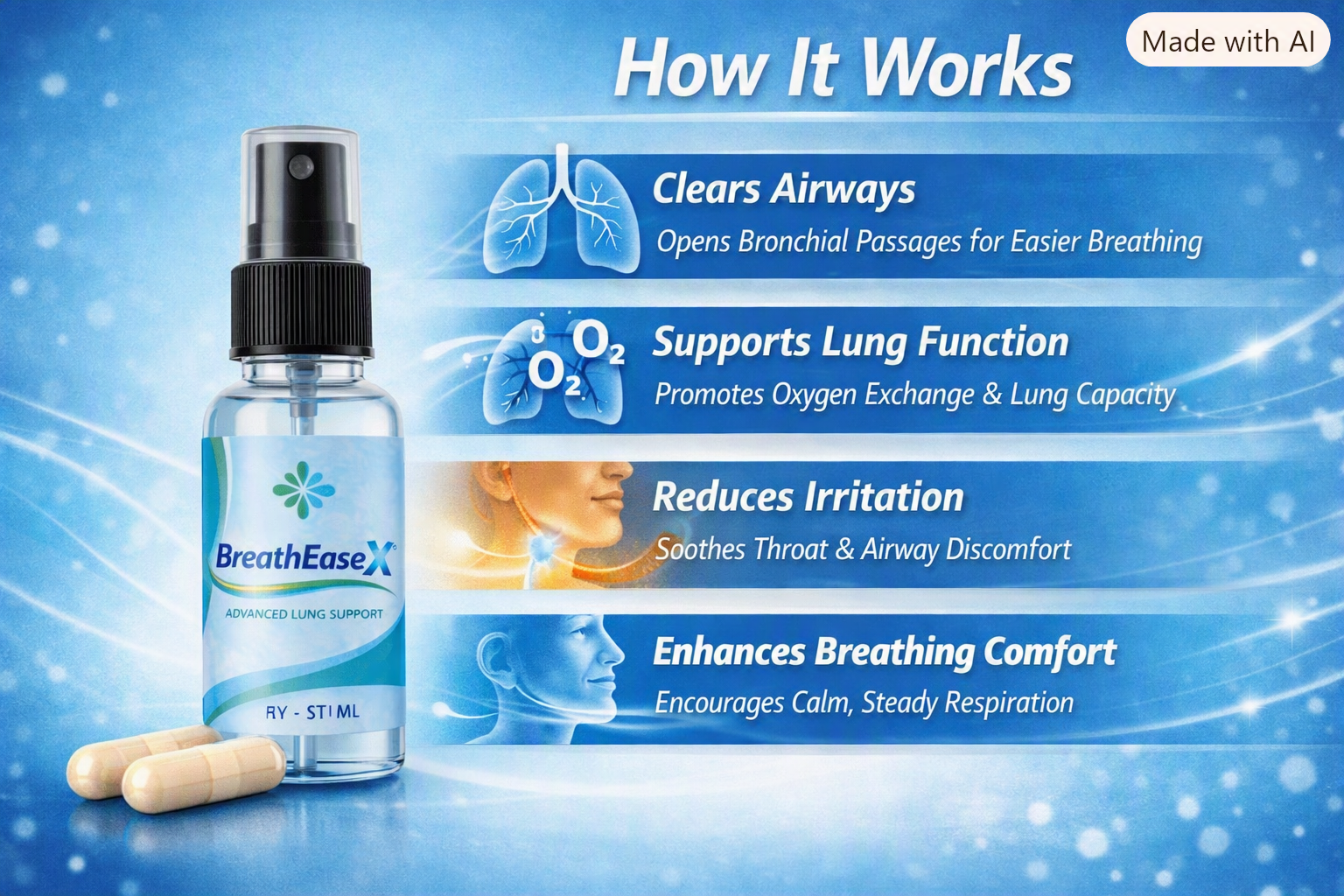
BreathEaseX targets the night-time airway irritation that fragments sleep, with no sedative involved.
Why it is not a sleep aid
Worth being precise about, because I have seen this product described online as helping sleep in a way that implies something it does not do.
There is no sedative in either formula. L-theanine is in there and is studied for relaxation without sedation — it does not make you drowsy and does not shorten sleep onset, which my own data reflects.
What appears to have changed is the thing that was waking me. Less night-time coughing means fewer awakenings. The sleep improvement is a downstream consequence of an airway effect, not a direct action on sleep.
That distinction matters because if your sleep problem is not airway-driven, there is no reason to expect this to help it.
The thing I checked first
Before buying anything I did a home sleep study, because my wife had mentioned snoring and I had daytime sleepiness.
It came back negative for significant apnoea. Had it come back positive, the appropriate response would have been CPAP, not a supplement, and I would want anyone in a similar position to check that before spending money here.
Loud snoring plus unrefreshing sleep plus daytime sleepiness is a specific pattern and it has a specific diagnostic pathway. No supplement treats obstructive sleep apnoea, and delaying diagnosis has real consequences.
Other things that mattered
I also raised the head of my bed and stopped eating within three hours of bedtime, on the basis of the reflux and cough connection.
That helped independently and I introduced it in week three, which confounds my data. My awakenings had already dropped from 3.1 to about 2.2 before that change, so I attribute part but not all of the improvement to the product.
Bedroom humidity was also low — 29 percent — and I addressed that in week five.
Three changes, one outcome. My data is not clean and I would rather say so.
Pros and cons
What worked
- Night awakenings dropped from 3.1 to 1.4 per night
- Subjective morning rating improved substantially
- No sedative effect and no morning grogginess
- Effect is plausibly explained by the airway mechanism
What did not
- Not a sleep aid and should not be bought as one
- I changed bed elevation and humidity at the same time
- Total sleep duration barely moved
- No help at all for sleep problems that are not airway-driven
The verdict
Sleep continuity improved substantially — fewer awakenings rather than more sleep — which is consistent with reduced night-time coughing rather than any sedative effect. I made two other changes in the same period, so my attribution is imperfect. Anyone with snoring and daytime sleepiness should get a sleep study before buying anything, because apnoea is a different problem with a different solution.